How to Get a Sponsorship Visa in Canada: Step-by-Step Guide for Skilled Professionals
Canada is one of the most welcoming countries for immigrants, offering various pathways for permanent residency and family reunification. One of the most popular methods is obtaining a sponsorship visa in Canada, which allows Canadian citizens or permanent residents to sponsor eligible family members to join them in Canada. Understanding the process, eligibility criteria, and required documentation is essential for a successful application.
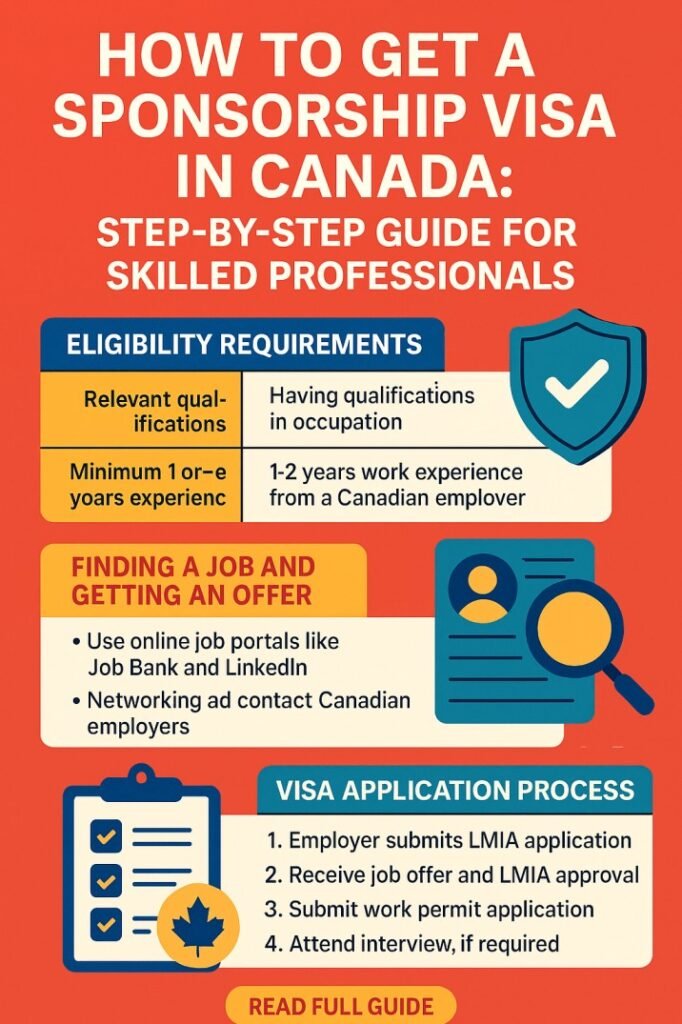
Table of Contents
What Is a Sponsorship Visa in Canada?
A sponsorship visa in Canada is a program under Immigration, Refugees, and Citizenship Canada (IRCC) that allows Canadian citizens or permanent residents to sponsor family members for permanent residence. The program focuses on family reunification, ensuring that spouses, partners, dependent children, and other eligible relatives can live in Canada with their loved ones.
Unlike other immigration streams, a sponsorship visa is based on a relationship rather than employment or education. This makes it an accessible route for families, but it requires careful attention to eligibility requirements and application procedures.
Who Can Sponsor a Family Member?
To apply for a sponsorship visa in Canada, the sponsor must meet the following criteria:
- Be a Canadian citizen or permanent resident.
- Be at least 18 years old.
- Demonstrate the ability to provide financial support for the sponsored relative.
- Not be receiving social assistance for reasons other than a disability.
- Agree to support the sponsored person for the required period.
Eligible sponsors can apply for various family members, including:
- Spouses, common-law partners, or conjugal partners.
- Dependent children, including adopted children.
- Parents and grandparents (under the Parent and Grandparent Program).
- Other relatives in special cases, such as orphaned siblings, nephews, or nieces.
Eligibility Criteria for Sponsored Individuals
Not every family member qualifies for a sponsorship visa in Canada. The sponsored person must meet certain criteria:
- Be related to the sponsor in one of the eligible categories.
- Be at least 18 years old unless dependent.
- Pass background checks, medical examinations, and security screenings.
- Not be inadmissible due to criminal or immigration-related issues.
Types of Sponsorship Visas
Canada offers different types of sponsorship programs depending on the relationship and circumstances. The main categories are:
| Sponsorship Type | Eligible Individuals | Typical Processing Time |
|---|---|---|
| Spousal or Partner Sponsorship | Spouses, common-law partners, conjugal partners | 12–24 months |
| Dependent Child Sponsorship | Biological, adopted, or stepchildren under 22 | 12–18 months |
| Parent and Grandparent Sponsorship | Parents and grandparents | Application period open annually; processing may take 20–36 months |
| Other Relative Sponsorship | Orphans, nephews, nieces, or siblings (rare cases) | Case-by-case basis |
Understanding which category applies is critical before starting the application, as documentation requirements and processing times vary.
Step-by-Step Process to Get a Sponsorship Visa in Canada
Applying for a sponsorship visa in Canada involves several steps. Following them carefully increases the chances of approval:
- Determine Eligibility
Both the sponsor and the person being sponsored must meet all eligibility requirements. It’s important to review IRCC guidelines thoroughly before proceeding. - Gather Required Documents
Key documents include:- Proof of Canadian citizenship or permanent residence of the sponsor
- Relationship proof (marriage certificate, birth certificates, photos, messages)
- Financial documents showing the sponsor’s ability to support
- Passport copies and identification for the sponsored person
- Police certificates and medical exams
- Complete the Application Forms
IRCC provides specific forms for sponsors and applicants. Forms must be filled accurately, signed, and submitted together with supporting documents. - Pay Fees
Fees vary based on the type of sponsorship. For example, spousal sponsorship fees include a processing fee, a right of permanent residence fee, and biometrics fees. - Submit the Application
Applications can be submitted online or via paper, depending on the program. Ensure all documents are organized according to IRCC instructions. - Attend Biometrics and Interviews
The sponsored person may need to provide fingerprints, photographs, and attend an interview if requested. - Wait for Processing and Decision
Processing times differ based on the type of sponsorship. Applicants can track their status online using IRCC’s portal. - Receive Permanent Residence
Once approved, the sponsored individual receives confirmation of permanent residence and can travel to Canada.
Common Mistakes to Avoid
Many sponsorship applications are delayed or refused due to avoidable errors. Avoid these mistakes to increase success:
- Submitting incomplete or incorrect forms.
- Providing insufficient proof of relationship.
- Not meeting financial obligations.
- Missing deadlines or failing to provide required updates.
- Not addressing inadmissibility issues like criminal records.
Financial Requirements for Sponsors
Sponsors must demonstrate that they can financially support the sponsored individual without relying on social assistance. Minimum income requirements vary depending on the number of family members being sponsored. For example:
| Number of Sponsored Persons | Minimum Income Requirement (CAD) |
|---|---|
| 1 | 32,899 |
| 2 | 40,445 |
| 3 | 49,345 |
| 4 | 57,955 |
| 5 | 65,765 |
Sponsors may need to provide tax returns, employment letters, and pay stubs to verify their income.
Tips for a Successful Sponsorship Visa in Canada
To improve your chances of approval:
- Submit a complete and organized application package.
- Include as much evidence of your relationship as possible.
- Ensure all documents are translated into English or French, if required.
- Respond promptly to IRCC requests for additional information.
- Seek professional advice if your case is complex or involves special circumstances.
Processing Times and Factors Affecting Approval
Processing times for a sponsorship visa in Canada depend on the type of sponsorship, applicant location, and completeness of the application. Factors that may affect approval include:
- Criminal history of the sponsored individual.
- Previous immigration violations.
- Insufficient proof of financial support.
- Inconsistent or insufficient documentation of the relationship.
Conclusion
Obtaining a sponsorship visa in Canada is a structured process designed to reunite families while ensuring eligibility and compliance with Canadian immigration laws. Understanding the requirements, gathering proper documentation, and submitting a complete application are crucial steps toward success. By following guidelines carefully and avoiding common mistakes, sponsors and applicants can achieve a smooth and efficient approval process, allowing families to live together in Canada.
Follow Us on Social:
Follow Trendwire for latest updates from Jobs Corner.
#HowToGetASponsorshipVisaInCanada, #CanadaWorkVisa, #LMIAProcess, #CanadianImmigration, #WorkPermitCanada, #SkilledWorkerCanada, #ForeignWorkerVisa, #CanadaJobSponsorship, #ImmigrationGuidance, #CareerInCanada