How to Sponsor Work Visa in Canada: Step-by-Step Guide for Employers & Professionals
Sponsoring a work visa in Canada can be a transformative opportunity for both employers seeking skilled talent and professionals looking to build a career in one of the world’s most dynamic economies. Understanding the process, requirements, and responsibilities involved is essential for a smooth application and successful approval. This guide provides a step-by-step approach on how to sponsor work visa in Canada, ensuring that employers and professionals navigate the system efficiently while complying with legal requirements.
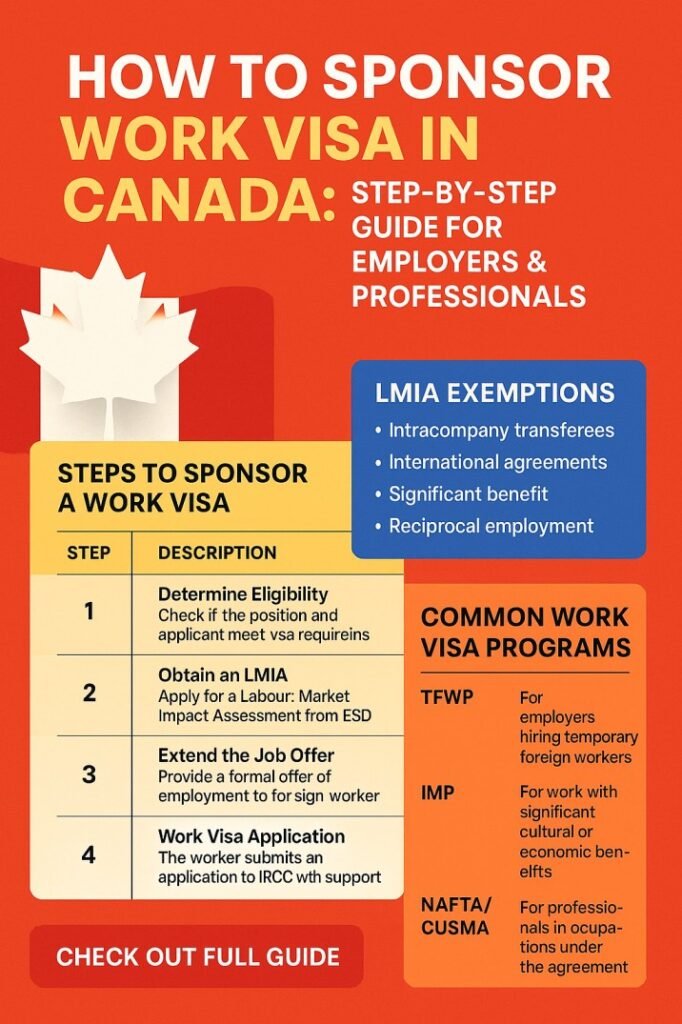
Table of Contents
Canada offers several types of work visas under its Temporary Foreign Worker Program (TFWP) and International Mobility Program (IMP). The choice of program depends on factors such as job type, duration, skill level, and whether the employer requires a Labour Market Impact Assessment (LMIA). The LMIA is a crucial step for most work visas as it verifies that hiring a foreign worker will not negatively affect the Canadian labor market.
How to Sponsor Work Visa in Canada
Step 1: Determine Eligibility for Sponsoring a Work Visa
Before starting the sponsorship process, employers must confirm their eligibility to hire foreign workers. This includes being a legally registered business in Canada and demonstrating the ability to pay wages and comply with employment standards. Professionals seeking employment must ensure that their skills, qualifications, and experience align with Canadian immigration requirements.
Know more about How to Get Sponsored Jobs in Canada: Proven Steps to Land Your Dream Job Fast
The eligibility checklist includes:
| Requirement | Details |
|---|---|
| Business Registration | Must be a legally recognized company in Canada with proper licenses and tax compliance |
| Financial Capability | Ability to pay wages and meet employment standards for the role |
| Job Offer | A genuine job offer with defined roles, responsibilities, and salary meeting Canadian labor standards |
| Worker Qualifications | Professional credentials, work experience, and language proficiency matching the job requirements |
Ensuring all these requirements are met is the first step in understanding how to sponsor work visa in Canada. Skipping any step can lead to delays or rejections.
Step 2: Decide the Appropriate Work Visa Program
Canada has multiple programs under which an employer can sponsor a work visa:
- Temporary Foreign Worker Program (TFWP) – Requires LMIA in most cases and is designed for employers who cannot find suitable Canadian citizens or permanent residents.
- International Mobility Program (IMP) – Does not usually require LMIA and includes categories like intra-company transfers, NAFTA/USMCA professionals, and open work permits for spouses of skilled workers.
- Global Talent Stream – A faster process under TFWP for highly specialized tech or skilled roles.
Choosing the right program depends on the job type, urgency, and worker qualifications. Professionals should confirm which visa suits their profile and whether LMIA is required.
Step 3: Obtain a Labour Market Impact Assessment (LMIA) if Required
For most work visas under TFWP, an LMIA is essential. It ensures that the foreign worker’s employment will not negatively affect Canadian workers. Employers apply for LMIA through Employment and Social Development Canada (ESDC) by providing detailed information about the job, recruitment efforts, and wage offered.
The LMIA application process includes:
| Step | Action |
|---|---|
| Job Advertisement | Post the job for a minimum duration to prove recruitment efforts for Canadian workers |
| Application Submission | Provide business details, job description, wage, and recruitment results to ESDC |
| Review Process | ESDC reviews the application for compliance and labor market impact |
| LMIA Decision | Approval provides a confirmation letter that the employer can use for visa application |
LMIA approval is a critical step for how to sponsor work visa in Canada and can take several weeks, so planning ahead is necessary.
Know more about How to Get a Sponsorship Visa in Canada: Step-by-Step Guide for Skilled Professionals
Step 4: Extend a Job Offer to the Foreign Worker
Once LMIA is approved (if required), employers issue a formal job offer. This offer must include all essential information such as job title, salary, hours, work location, and employment conditions. A clear, professional job offer increases the chances of a smooth visa approval.
Key elements of a valid job offer include:
- Position and duties
- Start and end date (if temporary)
- Salary and benefits
- Work hours and conditions
- Employer contact information
Professionals should review the offer carefully before accepting to ensure compliance with visa requirements.
Step 5: Submit the Work Visa Application
With LMIA approval and a job offer, the foreign worker can apply for a work visa through Immigration, Refugees and Citizenship Canada (IRCC). This step involves completing online forms, submitting supporting documents, and paying fees. Key documents include:
| Document | Purpose |
|---|---|
| LMIA Approval | Confirms employer’s eligibility to hire foreign worker |
| Job Offer Letter | Provides proof of employment and work terms |
| Passport & Identification | Required for visa processing |
| Educational Credentials | Verifies skills and qualifications |
| Language Test Results | If applicable, proves proficiency in English or French |
Visa processing times vary depending on nationality and program type. Applicants are encouraged to check the IRCC website for the most accurate timelines.
Step 6: Employer Responsibilities During Employment
Employers sponsoring work visas have ongoing responsibilities to ensure compliance with Canadian labor laws. These include:
- Paying the agreed-upon wage
- Maintaining employment conditions as per job offer
- Providing a safe and legal work environment
- Reporting any changes in employment status to IRCC
Failure to meet these obligations can affect future sponsorship eligibility and result in penalties.
Step 7: Support for Permanent Residency (Optional)
Many foreign workers eventually seek permanent residency in Canada. Employers can support this transition by providing documentation of employment history, salary, and job performance. Programs like the Canadian Experience Class or Provincial Nominee Programs can leverage work experience gained during the temporary work visa period.
Supporting employees through permanent residency strengthens the employer-employee relationship and ensures retention of skilled talent.
Tips for Smooth Work Visa Sponsorship
To enhance the likelihood of success when sponsoring a work visa, both employers and professionals should consider the following:
| Tip | Explanation |
|---|---|
| Plan Early | Start the LMIA and visa process well before the intended start date |
| Accurate Documentation | Provide complete and correct documents to avoid delays |
| Follow Program Rules | Ensure eligibility and program requirements are met |
| Communicate Clearly | Maintain open communication between employer, employee, and IRCC |
| Track Application | Use IRCC tracking tools to monitor progress and respond promptly to requests |
Common Mistakes to Avoid
Many work visa applications fail due to minor oversights. Avoid these pitfalls:
- Submitting incomplete LMIA or visa applications
- Offering salaries below Canadian labor standards
- Misrepresenting job roles or qualifications
- Ignoring program-specific requirements
By adhering to guidelines and staying informed, employers can successfully sponsor work visas without unnecessary delays.
Conclusion
Understanding how to sponsor work visa in Canada requires careful planning, attention to detail, and compliance with federal regulations. Employers must ensure business eligibility, obtain LMIA if required, provide a proper job offer, and fulfill ongoing responsibilities. Professionals seeking employment must align qualifications with Canadian requirements and submit accurate visa applications. Following this structured approach not only increases the chances of approval but also strengthens the professional relationship between employer and employee, paving the way for long-term career opportunities in Canada.
Canada remains a top destination for skilled talent, and with proper guidance, the work visa sponsorship process can be straightforward and rewarding for both employers and professionals.
Follow Us on Social:
Follow Trendwire for latest updates from Jobs Corner.
#HowToSponsorWorkVisaInCanada, #CanadaWorkVisa, #WorkVisaSponsorship, #ImmigrateToCanada, #CanadianJobs, #VisaSponsorshipTips, #CanadaImmigration, #WorkInCanada, #VisaProcessCanada, #CanadianWorkPermit